June Highlights: Celebrating 250 Years of American Innovation
As the United States celebrates its 250th anniversary this month, it is worth remembering that America’s rise to become the world’s preeminent innovation economy was built on the foundation of strong intellectual property rights laid at our country’s inception. When our nation’s Founders drafted the Constitution, they explicitly empowered Congress to “secur[e] for limited Times to Authors and Inventors the exclusive Right to their respective Writings and Discoveries.” Just a few years later, in 1790, George Washington signed the first U.S. patent law, firmly establishing America’s commitment to protecting intellectual property and promoting invention and enterprise.
Two and a half centuries later, America’s world-leading intellectual property system continues to power our national prosperity. From the telegraph and the telephone to lifesaving medicines, semiconductors, and artificial intelligence, virtually every transformative technology of the modern era traces back to inventors and creators who were able to take risks because of the security afforded by strong IP rights. Today, IP-intensive industries account for over 40% of U.S. economic output and support more than 62 million jobs, anchoring America’s technological and scientific leadership.
As policymakers and the public reflect on America’s history this summer, it is an ideal moment to recognize how strong, predictable IP rights have made our country’s historic successes possible. That’s why, throughout June, C4IP worked to commemorate America’s innovative legacy and underscore how the U.S. IP system serves as an engine of American discovery, competition, and economic growth:
- On June 8, C4IP released a report, independently authored by University of Southern California law professor Jonathan Barnett, titled Idea Factories: How Intellectual Property Sustains and Cultivates Technology Ecosystems, which uses examples from audio and video technology to quantum computing to demonstrate how IP rights enable innovators to commercialize breakthroughs and collaborate across the economy.
- The report was mentioned in IPWatchdog’s weekly news roundup.
Read It Now: “Idea Factories: How Intellectual Property Sustains and Cultivates Technology Ecosystems“
- On June 10, C4IP hosted a webinar with the IP Policy Institute (IPPI) entitled “IP at America’s 250th,” at which IP experts, including C4IP Co-Chair and former USPTO Director Andrei Iancu, discussed how intellectual property protections have evolved and helped America’s economy grow throughout its history.
Additional Coalition Updates
- On July 2, C4IP Executive Director Frank Cullen sent a letter to U.S. Trade Representative Jamieson Greer supporting the Section 301 investigation into Vietnam’s IP practices and urging USTR to press for stronger enforcement against counterfeiting and online piracy, while continuing to monitor gaps in Vietnam’s biopharmaceutical IP framework.
- On July 1, C4IP Executive Director Frank Cullen sent a letter to U.S. Trade Representative Jamieson Greer supporting the Section 301 investigation into Brazil’s IP practices and calling for targeted reforms to strengthen patent protections, reduce examination delays, and improve enforcement.
- On July 1, C4IP published a fact sheet urging Congress to pass PERA to restore clarity to Section 101 after Supreme Court decisions created uncertainty around patent eligibility, weakening incentives for innovation, investment, and U.S. competitiveness.
- On June 29, C4IP Executive Director Frank Cullen sent a letter to the House IP Subcommittee ahead of its June 30 hearing on internet-based IP violations, urging lawmakers to consider pro-IP reforms such as the NO FAKES Act and SHOP SAFE Act to strengthen IP protections in the digital age.
- On June 26, C4IP Board Member and former House Judiciary Committee Chairman Lamar Smith published an opinion essay in the Washington Examiner arguing that federal leaders should pursue targeted, bipartisan patent reforms to address Americans’ economic anxieties.
“[I]f the president is looking for ways to strengthen job prospects, bring down prices, and put America’s economy on a surer footing, addressing some of the most serious problems in our patent system is a good place to start.”
- On June 25, C4IP joined the Center of Science and Industry (COSI) for the VIP and Media Showcase Launch of the National STEM Festival on the National Mall, engaging with student awardees as Office of Science and Technology Policy (OSTP) Director Jake Easter delivered keynote remarks.
- During the June 27 public Build Day, COSI featured C4IP materials among its education partner resources.
- On June 25, C4IP Co-Chair Andrei Iancu was a featured panelist at the Biotechnology Innovation Organization’s International Convention, where he discussed how coordinated anti-innovation efforts seek to erode the IP rights that underpin life sciences innovation.
- On June 24, C4IP Executive Director Frank Cullen submitted a letter to the Senate Finance Committee urging the prompt confirmation of Peter-Anthony Pappas to the U.S. International Trade Commission and highlighting his rare combination of patent expertise and public service.
- C4IP’s letter was quoted in an IPWatchdog article on the Finance Committee’s hearing to consider Pappas’ nomination.
- On June 18, C4IP Co-Chair David Kappos and former Deputy U.S. Trade Representative Jeffrey Gerrish published an op-ed in the Washington Post underscoring the need for stronger international IP enforcement in light of the recent publication of the 2026 Special 301 Report.
“This year’s report is an essential reminder to Democrats and Republicans alike: Securing Americans’ IP rights abroad is a necessary step to ensuring a strong economy at home.”
- On June 18, C4IP Executive Director Frank Cullen issued a statement applauding the Senate Judiciary Committee’s vote to advance the bipartisan NO FAKES Act, which would create federal safeguards against the unauthorized use of AI-generated replicas of individuals’ voices, images, and likenesses.
- On June 15, C4IP co-hosted an innovation roundtable with We Work For Health and Life Sciences Pennsylvania at Rockland Immunochemicals in Pennsylvania, bringing together Rep. Madeleine Dean (D-PA) and local life sciences leaders to discuss how strong intellectual property protections support medical innovation, advanced manufacturing, and patient access.
- On June 15, C4IP Executive Director Frank Cullen sent a letter to the Senate Health, Education, Labor and Pensions Committee explaining why the proposed Medication Affordability and Patent Integrity Act would not advance generic and biosimilar drug access, but would undermine the efficacy of the patent system and jeopardize U.S. competitiveness.
- On June 10, C4IP Executive Director Frank Cullen issued a statement urging Congress to reconsider the Prohibiting Adversarial Patents Act, warning that denying U.S. patent rights to designated foreign entities could invite retaliation against American innovators abroad, conflict with U.S. treaty obligations, and erode the principle that patents are secure property rights.
- C4IP’s statement was quoted in an IPWatchdog article on the introduction of the bill.
- On June 4, C4IP Chief Policy Officer and Counsel Jamie Simpson testified at a House IP Subcommittee hearing on how intellectual property and strong patent rights enable life science innovation.
- On June 3, C4IP Executive Director Frank Cullen sent a letter to the House IP Subcommittee ahead of its hearing on medicines and IP, emphasizing that strong patent rights are essential to sustaining investment in the research-intensive life sciences sector and cautioning against proposals that would weaken patent enforcement.
- On June 2, C4IP Executive Director Frank Cullen issued a statement applauding President Trump’s nomination of former USPTO patent examiner Peter-Anthony Pappas to the U.S. International Trade Commission and noting Pappas’ longstanding dedication to protecting IP.
- C4IP’s support was mentioned in an IPWatchdog article reporting on Pappas’ nomination.
- On June 1, Delaware business leaders Joshua Berkow, Alan Silverstein, Michael Quaranta, Ayanna Khan-Flowers, and Yvonne Deadwyler published an op-ed in the Delaware Business Times encouraging more lawmakers to follow Sen. Chris Coons’ (D-DE) lead in advocating for strong IP rights.
Government Rundown
- Upcoming: United States Patent and Trademark Office Event: “2026 Innovation Expo”: On September 21-22, the U.S. Patent and Trademark Office will host its inaugural Innovation Expo at USPTO headquarters in Alexandria, Virginia, with virtual participation also available. The two-day event will feature panel discussions, networking opportunities, and resource booths focused on artificial intelligence, intellectual property, entrepreneurship, branding, commercialization, and funding opportunities for innovators. Interested participants can register here. (United States Patent and Trademark Office, 9/21-22)
- U.S. Court of Appeals for the Federal Circuit Event: “Justice Up Close, History All Around” America250 Open House: On July 3, the Federal Circuit Center for Innovation & Law held a one-day program, open to the public, to commemorate America’s semiquincentennial. Visitors were able to take part in a mock trial, meet federal judges, and explore exhibits connecting law, science, and history. (U.S. Court of Appeals for the Federal Circuit, 5/18)
- House Committee on the Judiciary, Subcommittee on Courts, Intellectual Property, Artificial Intelligence, and the Internet Hearing: A Midlife Crisis? IP and the Internet After 40: On June 30, the House IP Subcommittee held a hearing to discuss how intellectual property protections and enforcement have evolved during the Internet age, as issues such as piracy, counterfeiting, and digital replicas have risen in prevalence. C4IP submitted a letter to the subcommittee ahead of the hearing commending lawmakers for addressing these issues and urging consideration of pro-IP reforms such as the SHOP SAFE Act and the NO FAKES Act. (House Judiciary Committee, 6/30)
- Senate Committee on Finance Hearing: Hearing to Consider the Nominations of International Trade Commission Nominees: On June 25, the Senate Finance Committee held a hearing to consider several nominees to the U.S. International Trade Commission, including Peter-Anthony Pappas, a former USPTO patent examiner with deep experience in IP policy. C4IP had previously submitted a letter and issued a press release expressing strong support for Pappas’ confirmation. (Senate Finance Committee, 6/25)
- Senate Committee on the Judiciary Hearing: Executive Business Meeting: On June 18, the Senate Judiciary Committee held an executive business meeting at which it voted to advance the bipartisan NO FAKES Act of 2026, which would establish federal protections against unauthorized AI-generated replicas of individuals’ voices and likenesses. The vote reflects a growing bipartisan consensus that creators, performers, and ordinary Americans need clear legal safeguards as generative AI transforms how content is created and distributed. (Senate Judiciary Committee, 6/18)
- House Committee on the Judiciary, Subcommittee on Courts, Intellectual Property, Artificial Intelligence, and the Internet Hearing: Medicines and IP: Balancing Innovation and Access: On June 4, the House Judiciary IP Subcommittee held a hearing examining the relationship between pharmaceutical patents, innovation, and patient access. C4IP sent the subcommittee a letter ahead of the hearing urging lawmakers to preserve strong patent protections. C4IP Chief Policy Officer and Counsel Jamie Simpson also gave testimony underscoring the successes of the patent system and debunking common myths about alleged patent abuses. (House Judiciary Committee, 6/4)
Fact Check
Policymakers at the U.S. Patent and Trademark Office are working to bring greater clarity to one of the most confusing areas of patent law: Section 101, the provision that determines which inventions are eligible for patent protection. These efforts are welcome and important: A series of recent Supreme Court decisions expanded vague judicial exceptions to patent eligibility, leaving inventors and investors struggling to determine which inventions qualify for protection and plunging many high-tech industries into uncertainty.
Yet while administrative guidance can help examiners apply the law more consistently, it cannot permanently resolve the uncertainty created by court precedent. That’s why lawmakers from both parties are advancing the Patent Eligibility Restoration Act, or PERA, which would clarify Section 101 by replacing today’s unpredictable, court-created framework with clearer statutory rules. PERA would restore eligibility for practical, applied inventions in critical fields while preserving key limits on patenting mere ideas, natural phenomena, and basic scientific principles.
Unfortunately, patent critics continue to make unfounded claims about this bill, jeopardizing the prospect of Section 101 reform and the future of U.S. innovation. Below, we clarify some key misconceptions about Section 101 and the Patent Eligibility Restoration Act:
| Claim: The current Section 101 framework is working fine. |
| In reality: The current framework has created significant uncertainty for inventors, investors, patent examiners, and courts. It declares certain types of concepts — including “abstract ideas,” “laws of nature,” and “natural phenomena” — ineligible for patenting, but doesn’t clearly define which inventions fall into these broad categories. In many cases, courts have swept clearly innovative advances in software, medical diagnostics, and other high-tech fields into these categories.
That uncertainty and inconsistency have made it difficult to predict whether even important technological advances will receive patent protection, disincentivizing investors from funding research and development in critical high-tech areas. After the Supreme Court’s 2012 decision in Mayo v. Prometheus, for instance, lower courts applied Section 101 to invalidate patents on certain medical diagnostic inventions. Studies have found that investment in disease diagnostics was nearly $9.3 billion lower in the four years after Mayo than it would have been without the decision. This withheld investment has not only limited patients’ options but also undermined U.S. competitiveness in a growing technology field. Federal Circuit judges have repeatedly recognized the problem. In cases such as Athena Diagnostics v. Mayo Collaborative Services and American Axle v. Neapco, judges have expressed frustration with the fact that Supreme Court precedent has forced them to disallow innovative patents that meet all other legal criteria. Federal Circuit judges have also warned that the lack of clarity surrounding patent eligibility has sparked disagreement among judges, produced inconsistent outcomes, and prevented courts from applying the law evenly across cases and companies. If the expert court responsible for patent law cannot apply the framework predictably, the framework is not working. |
| Claim: Policymakers should leave Section 101 reform to the courts, rather than passing PERA. |
| In reality: Section 101 is a statute, not part of the Constitution — which means Congress has both the authority and responsibility to clarify it when judicial interpretations create confusion or unintended consequences. While USPTO guidance may help resolve uncertainty, it cannot resolve the underlying problem that valid and deserving inventions are being denied patent protection by overbroad court precedents. This is precisely why Federal Circuit judges have called for congressional intervention. Moreover, the Supreme Court has repeatedly declined to revisit the issue, including in high-profile eligibility cases such as Athena and American Axle. That leaves Congress as the only institution capable of delivering a durable fix.
Fortunately, PERA is a tailored solution that would directly address the problems facing innovators. The bill would restore eligibility for meritorious technological inventions while maintaining guardrails — in clearer language — against patenting mere ideas, basic scientific principles, and things that exist in nature. It would also leave unchanged the rest of patent law’s requirements, including novelty, nonobviousness, usefulness, and adequate disclosure. Importantly, PERA is a bipartisan effort and has already undergone rounds of negotiation and revision to alleviate concerns that it could inadvertently enable inventors to patent concepts that should not be patented. PERA is the permanent, measured solution that inventors and policymakers alike have been demanding. It has a crucial role to play in promoting American competitiveness: without congressional action to reform Section 101, innovators will continue to face uncertainty and struggle to attract investment in fields such as artificial intelligence and medical diagnostics, where the United States should be leading the world. Important discoveries could remain trapped in labs, while the United States could cede leadership to other countries that embrace stronger patent protections for emerging technologies. If policymakers want to restore clarity and fairness for American inventors navigating patent eligibility issues, passing the Patent Eligibility Restoration Act is the strongest and simplest way to achieve that goal. |
Celebrating American Innovation
Inventor Spotlight
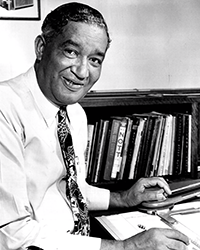
This month, C4IP is recognizing Frederick McKinley Jones (1893-1961), whose invention of mobile refrigeration revolutionized how the world transports food and medicine.
- Orphaned at a young age, Jones was a self-taught mechanic who started working as a full-time auto mechanic at 14 and later helped maintain the U.S. Army’s communications systems, vehicles, and electrical equipment during World War I.
- After the war, Jones became a movie projectionist in Minnesota and invented new technologies related to movie sound and radio — drawing the attention of a local entrepreneur, who asked him to develop a way to transport food without letting it spoil.
- Jones patented his solution — a compact refrigeration unit that could be mounted to a truck — in 1942.
- Jones received more than 60 patents over his lifetime.
- To commercialize his invention, Jones founded Thermo King, which supplied refrigerated transport for food, blood, and medicine during World War II and grew into an international corporation with more than $1 billion in annual sales by the time it was acquired in 1997.
- His invention made it possible — alongside the new interstate highway system — to ship meat, dairy, and fresh produce across the country year-round, helping improve the nation’s diet and nutrition.
- Due to his incredible impact, Jones was inducted as the first Black member of the American Society of Refrigeration Engineers in 1944.
- He became the first Black American to receive the National Medal of Technology when he was posthumously honored in 1991.
- Today, the cold chain that Jones pioneered is bigger than ever: the global cold chain logistics market was valued at roughly $436.3 billion in 2025, helping deliver food and medicine safely to consumers.
[PHOTO: Biography.com]

What’s Happening in Congress
Democratic and Republican lawmakers continue to weigh legislation to prioritize strengthening IP protections, including the reintroduction of several significant bills from the previous Congress:
- The Patent Eligibility Restoration Act (PERA), which would revitalize innovation and investment in crucial high-tech sectors by reversing arbitrary, judicially created exceptions to patent eligibility.
- The Promoting and Respecting Economically Vital American Innovation Leadership (PREVAIL) Act, which would level the legal playing field for inventors and give them a fair chance to defend their patents from unauthorized infringement by larger competitors.
- The Realizing Engineering, Science, and Technology Opportunities by Restoring Exclusive (RESTORE) Patent Rights Act, which was reintroduced in both the House and Senate. This bipartisan, bicameral legislation would reestablish injunctive relief as the primary legal remedy for patent infringement, reaffirming innovators’ constitutional rights to the exclusive ownership of their inventions.
- The Nurture Originals, Foster Art, and Keep Entertainment Safe (NO FAKES) Act, which would protect all individuals from having their voice and visual likeness copied by generative AI without consent.
We will continue to track movement on these bills and provide updates on legislative developments in upcoming editions. In the interim, you can find resources on these key issues here.