July Highlights: Protecting American IP in the Internet Era
The House Judiciary Subcommittee on Courts, Intellectual Property, Artificial Intelligence, and the Internet recently held a hearing, “A Midlife Crisis? IP and the Internet After 40,” examining the intellectual property challenges that have emerged over four decades of the digital age. Put simply, the internet has transformed how creators and inventors share their work with the world — but it has also given bad actors powerful new tools to steal that work. From pirated and counterfeit goods sold through e-commerce platforms to the rise of AI-generated “digital replicas” that mimic a person’s voice and likeness without consent, the same technologies that connect Americans have also created new avenues to undermine the IP rights that underpin continued innovation.
These threats harm creators and entrepreneurs’ livelihoods by making it more difficult to earn money from their work. But they also harm consumers, who risk being lured into scams and may even be exposed to dangerous counterfeit goods. Even the U.S. economy depends on reliable IP protection throughout the internet: IP-intensive industries account for 44% of U.S. private sector GDP and support tens of millions of American jobs. This is why Congress is now weighing durable solutions — including legislation such as the NO FAKES Act and SHOP SAFE Act — to ensure IP enforcement remains effective in the digital age.
Throughout July, C4IP advocated for a strong, enforceable IP system to protect American creators and inventors from growing Internet-era threats:
- C4IP Executive Director Frank Cullen sent a letter to the House IP Subcommittee ahead of its hearing on internet-based IP violations, urging lawmakers to advance pro-IP reforms such as the NO FAKES Act, the SHOP SAFE Act and legislation authorizing site blocking of foreign piracy websites to strengthen intellectual property protections in the digital age.
- C4IP submitted a statement for the record for the hearing.
- C4IP’s statement was featured in Legis1’s coverage of the hearing, which detailed the wide support from IP advocates for greater digital enforcement of copyrights and other IP protections.
Additional Coalition Updates
- On July 28, C4IP Executive Director Frank Cullen issued a statement applauding the National Academy of Inventors and the USPTO for launching a new five-year initiative to foster IP education and cross-sector collaboration, which C4IP joined as a founding coalition partner.
- On July 22, C4IP Executive Director Frank Cullen participated in a panel discussion on U.S. and EU competitiveness at the Transatlantic Policy Network’s 2026 Transatlantic Week in Washington, D.C., to discuss shared transatlantic challenges and the role of strong IP rights in sustaining innovation.
- On July 15, C4IP Chief Policy Officer and Counsel Jamie Simpson published an article in IAM detailing ongoing and urgent patent reform efforts in the 119th Congress, including the Patent Eligibility Restoration Act, PREVAIL Act, and RESTORE Patent Rights Act.
- On July 14, C4IP Co-Chair and former USPTO Director Andrei Iancu testified at the Senate Judiciary Committee’s hearing, “From Genes to Machines: The Patent Eligibility Debate,” where he advocated for the passage of the Patent Eligibility Restoration Act to promote innovation in 21st-century technologies.
- Iancu’s testimony was featured in MLex’s and VitalLaw’s coverage of the hearing.
- On July 13, C4IP submitted a letter to the Senate Judiciary Committee ahead of its hearing on patent eligibility, urging lawmakers to pass the Patent Eligibility Restoration Act (PERA) to fix the judicially created exceptions to Section 101 that have injected uncertainty into the U.S. patent system.
- On July 13, C4IP Co-Chair and former USPTO Director David Kappos, along with China IP policy scholar Mark Cohen, published an opinion essay in The National Interest warning that China is strengthening its IP system as a tool of state power while the United States retreats from its historic role as an IP champion.
“If the United States is to answer China’s rising IP leadership, it must demonstrate that when the right legal protections and incentives are in place, innovation is strongest in democracies and market economies.”
- On July 13, C4IP released a new infographic highlighting key takeaways from University of Southern California Gould School of Law Professor Jonathan Barnett’s June report, “Idea Factories,” which examined how intellectual property sustains and cultivates the technology ecosystems that drive American innovation.
- On July 9, C4IP issued a statement congratulating C4IP Advisory Board Member Laura Peter on her confirmation as Deputy Director General of the World Intellectual Property Organization’s (WIPO) Patents and Technology Sector.
- C4IP’s statement was quoted in IPWatchdog’s coverage of the appointment.
- On July 9, C4IP released a new issue brief urging Congress to pass the Patent Eligibility Restoration Act in order to restore clarity to Section 101 after Supreme Court decisions weakened incentives for innovation, investment, and U.S. competitiveness.
- C4IP also updated its “Key Issues” page on PERA to spotlight more resources detailing the issue and the bill’s merits.
- In early July, C4IP released five videos from its recent event with the Alliance of U.S. Startups & Inventors for Jobs (USIJ), “Securing the Future of U.S. Innovation: The Importance of IP Rights,” including a highlight reel and four short segments discussing the various reasons strong IP protections are crucial to America’s future.
- “Innovation Needs IP“ discusses why strong IP rights are necessary for U.S. economic growth.
- “IP and American Competitiveness“ underscores that a strong domestic IP system will be key to outcompeting China.
- “Importance of Innovation Incentives“ explains how IP rights enable inventors and investors to take risks in developing new technologies.
- “Protecting Innovation Here and Abroad“ outlines how U.S. trade policy must work to ensure respect for IP rights globally.
Government Rundown
USPTO Event: America 250 Ceremonial Patent and Trademark Signing:
On July 24, the U.S. Patent and Trademark Office held a ceremonial patent and trademark signing to commemorate America’s 250th anniversary, unveiling new Innovator Trading Cards to recognize the inventors and creators who have shaped the nation. USPTO Director John Squires and Commerce Secretary Howard Lutnick offered remarks, with Squires emphasizing that “patents and trademarks play a vital role in society, change our daily lives, and inspire a new generation of innovators and entrepreneurs.” (USPTO, 7/24)
Senate Committee on the Judiciary Hearing: From Genes to Machines: The Patent Eligibility Debate:
On July 14, the full Senate Judiciary Committee held a hearing to examine the state of U.S. patent-eligibility law and the case for reform through the Patent Eligibility Restoration Act. Witnesses, including C4IP Co-Chair and former USPTO Director Andrei Iancu, testified about the uncertainty that judicially created exceptions to Section 101 have introduced across critical sectors such as diagnostics, life sciences, and artificial intelligence, and C4IP submitted a letter urging lawmakers to pass PERA to restore predictability and protect American innovation. (Senate Judiciary Committee, 7/14)
World Intellectual Property Organization Names Laura Peter to Lead Patents and Technology Sector:
On July 9, the World Intellectual Property Organization’s (WIPO) Coordination Committee confirmed C4IP Advisory Board Member Laura Peter’s appointment to become the Deputy Director General of its Patents and Technology Sector. C4IP issued a statement applauding the appointment and congratulating Peter, who currently leads technology transfer efforts at the University of North Carolina at Charlotte and previously served as Deputy Director of the USPTO. (WIPO, 7/9)
Fact Check
The Senate Health, Education, Labor and Pensions (HELP) Committee recently voted to advance the Medication Affordability and Patent Integrity Act (S. 2658), a bill from Senators Maggie Hassan (D-NH) and Josh Hawley (R-MO) that would impose new disclosure and certification requirements involving information provided to the FDA and USPTO. The bill’s proponents argue it would stop drug companies from “gaming” the patent system to block generic competition. But in reality, the bill rests on a fundamental misunderstanding of how the patent system works.
The FDA and USPTO serve fundamentally different purposes, and much of the information submitted to the FDA has no relevance to patent examination. When FDA information is material to patentability, patent applicants already have a duty to disclose it to the USPTO. S. 2658 would therefore layer new paperwork and certification requirements onto an existing obligation without giving patent examiners information they are not already entitled to receive. It would also put companies at risk of losing patent protection because of paperwork errors — potentially fueling costly litigation, making patent rights less reliable, and weakening America’s biotechnology competitiveness.
Below, we examine three flawed claims underlying the Medication Affordability and Patent Integrity Act:
| Claim: The FDA and USPTO would benefit from greater information sharing. |
| In reality: The FDA and USPTO are designed to evaluate different questions under different legal standards. The FDA determines whether a medicine is safe and effective, while the USPTO determines whether an invention qualifies for patenting. Information relevant to one agency’s work will generally have little bearing on the other’s. Clinical data provided to the FDA, for example, may be pertinent to some claimed inventions but entirely irrelevant to others. Its significance for patent examination depends on what the patent claims actually cover — not simply on the fact that the information was submitted to the FDA.
When information provided to the FDA is pertinent to questions of patentability, the USPTO already requires inventors to provide it as part of the patent application process. Companies can face severe penalties, including having their patents rendered unenforceable, if they intentionally provide false information in their applications or fail to disclose materially relevant, non-duplicate information. Requiring companies to provide additional FDA-related information to the USPTO, as S. 2658 would do, would not make it any riskier or more difficult for companies to lie. It would only inundate FDA officials and patent examiners with irrelevant documents, slowing patent examination and regulatory review processes to the detriment of both inventors and patients. |
| Claim: The bill would only penalize bad actors that seek to “game” the patent system. |
| In reality: The bill could put companies at risk of losing otherwise valid patent rights — earned through years of costly research and development — because of a clerical error or inadvertent omission, even when there was no intent to deceive the USPTO. That would be a disproportionate penalty for a paperwork mistake unrelated to whether the underlying invention merits patent protection. By imposing a negligence standard — substantially lower than current law‘s general requirement of specific intent to deceive — the bill would also encourage significantly more patent litigation.
One reason that the Federal Circuit adopted its high standard of intentionality was that previously, lower standards had led to what it called a “plague” of companies accusing their rivals of inequitable conduct in order to get patents invalidated. Companies accused of patent infringement, for example, could use any inconsistency in their opponent’s submissions to the FDA and USPTO to bring a lawsuit to have the relevant patent invalidated. S. 2658 risks reviving that practice. Any apparent discrepancy between submissions to the two agencies could become grounds for a patent lawsuit. As a result, the bill would not only harm companies that lie or seek to exploit loopholes, but would affect virtually every pharmaceutical and biotechnology company by increasing legal expenses, administrative burdens, and weakening the stability of patent rights across the industry. |
| Claim: The bill would benefit patients. |
| In reality: Patients benefit when innovators can attract the enormous investment required to turn promising discoveries into approved treatments — and that process would become much more difficult under S. 2658. Small companies are responsible for an outsized share of biotech innovation: Research has found that small biopharmaceutical firms developed 55% of the U.S.-originated medicines approved between 2011 and 2020. But small firms are also heavily dependent on reliable patent rights to attract outside investors and commercial partners. By weakening the reliability of biotech patents and leaving small companies more vulnerable to legal attacks from larger, better-resourced competitors, S. 2658 would make it much more difficult for small biotechs to secure investment and take their inventions to market.
The bill could also hurt patients by weakening the strength of the U.S. biotech sector globally. China is working tirelessly to overtake the United States as the world’s chief biotech innovator; it now accounts for nearly a third of the global drug development pipeline. Burdening American innovators with additional litigation and less reliable patent rights would further tilt the competitive landscape in China’s favor. That could increase the chance that the next generation of medical breakthroughs is developed overseas — weakening patient access in the future. |
Celebrating American Innovation
Inventor Spotlight
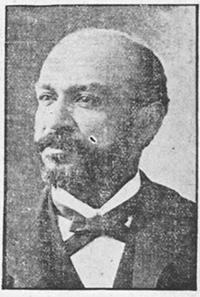
This month, C4IP is recognizing Joseph Lee (1849-1908), who helped transform baking from a labor-intensive craft into an efficient national industry.
- Born into slavery in South Carolina, Lee worked as a cook and steward in the U.S. Coast Survey and built a successful career as a Boston-area hotelier and restaurateur after gaining his freedom.
- Working in busy commercial kitchens, Lee noticed several problems with traditional bread-making: it required considerable time and labor, was often unsanitary, and created waste when day-old bread went unsold.
- To solve these problems, Lee invented and patented machines to mix and knead dough automatically and to convert unsold bread into usable bread crumbs.
- Lee’s inventions helped commercial kitchens produce consistent loaves more efficiently and recover value from bread they otherwise would have discarded.
- Lee used his patent rights to spread his technology while sharing in its commercial success, selling his kneading-machine rights to the National Bread Co. in exchange for stock and royalties and his breadcrumb-machine rights to the Royal Worcester Bread Co.
- More than a century later, over half of Americans eat sandwich bread at least once a week, illustrating how industrial-scale baking helps keep millions of families fed.
- The American commercial baking industry today supports nearly 800,000 jobs, pays more than $42 billion in direct wages, and contributes over $186 billion to the economy.
[IMAGE: Boston Preservation Alliance]
What’s Happening in Congress
Democratic and Republican lawmakers continue to weigh legislation to prioritize strengthening IP protections, including the reintroduction of several significant bills from the previous Congress:
- The Patent Eligibility Restoration Act (PERA), which would revitalize innovation and investment in crucial high-tech sectors by reversing arbitrary, judicially created exceptions to patent eligibility.
- The Promoting and Respecting Economically Vital American Innovation Leadership (PREVAIL) Act, which would level the legal playing field for inventors and give them a fair chance to defend their patents from unauthorized infringement by larger competitors.
- The Realizing Engineering, Science, and Technology Opportunities by Restoring Exclusive (RESTORE) Patent Rights Act, which was reintroduced in both the House and Senate. This bipartisan, bicameral legislation would reestablish injunctive relief as the primary legal remedy for patent infringement, reaffirming innovators’ constitutional rights to the exclusive ownership of their inventions.
- The Nurture Originals, Foster Art, and Keep Entertainment Safe (NO FAKES) Act, which would protect all individuals from having their voice and visual likeness copied by generative AI without consent.
We will continue to track movement on these bills and provide updates on legislative developments in upcoming editions. In the interim, you can find resources on these key issues here.