May Highlights: Strengthening Global IP Protection Through the Special 301 Report
In late April, the Office of the United States Trade Representative released its 2026 Special 301 Report, the annual review of the adequacy and effectiveness of intellectual property protections and enforcement among U.S. trading partners. By highlighting abuses and violations of IP protections by foreign countries, this report plays an essential role in upholding strong standards of IP protection around the world and ensuring that American inventions, brands, and creative works can compete fairly in foreign markets.
The 2026 report highlights persistent challenges to protection of American IP abroad, noting widespread violations in China and India. Notably, the European Union was added to the report’s Watch List for the first time in almost two decades. For the first time, the report also raised concern about the global landscape for the enforcement of standard-essential patents, highlighting practices, such as broad anti-suit injunctions, that hurt American innovators and impinge on U.S. national sovereignty. Conversely, the report also identified progress in certain regions, such as strengthened IP protections in Argentina, leading to its removal from the Priority Watch List.
These findings offer critical clarity for American innovators regarding the security of their global IP rights. Furthermore, for policymakers, the report identifies where U.S. trade intervention and negotiation are most needed to secure fairer trade relations. Throughout May, C4IP leveraged these insights to advocate for stronger global IP rights:
- C4IP issued a statement applauding the strong stance of the 2026 Special 301 Report and emphasizing the importance of firm international IP enforcement to sustaining American innovation leadership.
- C4IP published a blog post explaining the key takeaways and changes in the 2026 Special 301 Report, including both signs of progress and persistent global threats to American innovators’ intellectual property rights.
- C4IP Co-Chairs Andrei Iancu and David Kappos published an opinion essay in The Hill explaining how the federal government should work to solve the various IP violations laid out in the Special 301 Report, including by calling out the harmful practices of allies like the European Union, Canada, and Mexico.
“[I]t is time to call out the increasingly blatant efforts to undermine intellectual property by our allies — not just our adversaries — and urgently work with these trading partners to reform their ways.”
- C4IP and the Alliance of U.S. Startups & Inventors for Jobs hosted a panel discussion analyzing how U.S. innovation and trade policy can promote strong IP rights, which featured C4IP Co-Chair David Kappos alongside former Deputy U.S. Trade Representative Ambassador Jeffrey Gerrish.
Additional Coalition Updates
- On June 2, C4IP Executive Director Frank Cullen released a statement applauding the nomination of Peter-Anthony Pappas to the United States International Trade Commission.
- On May 26, C4IP issued a statement applauding the bipartisan reintroduction of a revised version of the NO FAKES Act in the House and Senate, which would establish federal IP protections against unauthorized AI-generated imitations of individuals’ voices, images, and likenesses.
- C4IP’s statement was quoted in an article on the dangers of AI deepfakes published by News 6 Orlando.
- On May 21, C4IP Executive Director Frank Cullen submitted a comment letter to the Department of Justice and Federal Trade Commission urging policymakers to preserve the government’s existing framework for patent pools, refrain from issuing guidance on licensing negotiation groups to avoid inadvertently undermining patent holders, and to investigate the antitrust risks posed by standards development organizations that lack FRAND commitments.
- On May 20, former Deputy U.S. Trade Representative Jeffrey Gerrish, former Secretary of Commerce and U.S. Ambassador to China Gary Locke, and C4IP Co-Chairs and former USPTO Directors Andrei Iancu and David Kappos sent a letter to House Ways and Means Committee Chairman Jason Smith (R-MO) and Ranking Member Richard Neal (D-MA) expressing their support for the USTRx Act.
- In the letter, the former U.S. government officials applaud the bill and its establishment of a Chief Pharmaceutical Trade Negotiator within the Office of the United States Trade Representative.
- On May 20, C4IP published a blog post explaining in detail why inventors, innovators, and IP experts across America endorse meaningful reforms to the Patent Trial and Appeal Board, including the USPTO’s recent Notice of Proposed Rulemaking aimed at curbing abuse in the PTAB’s inter partes review proceedings as well as legislative solutions like the PREVAIL Act.
-
- Drawing from the USPTO’s recent listening sessions on PTAB reform as well as past comments from entrepreneurs, advocacy groups, and lawmakers, the post underscored the broad consensus around the urgent need for PTAB reform. It also explained why policymakers would be unwise to judge stakeholder views simply by counting the number of public comments submitted for and against the proposed rules.
-
Read It Now: “The Case for Change: Why a Broad, Bipartisan Coalition Is Pushing for PTAB Reform“
- On May 18, C4IP Board Member Judge Paul Michel and C4IP Chief Policy Officer and Counsel Jamie Simpson featured on the USPTO’s expert panel during its listening session on PTAB Administration and Reform, where they argued in favor of reforms that limit abusive, serial petitions and restore balance for small innovators.
- Michel’s and Simpson’s testimonies highlighting the lack of clarity on PTAB rules and high prevalence of repeat PTAB challenges were cited in an IPWatchdog article summarizing the listening session series.
- Simpson was also quoted in a Law360 article speaking in favor of raising the PTAB’s standard of evidence to match that used by district courts.
- On May 5, C4IP Executive Director Frank Cullen sent a letter to the Department of Justice, Department of Commerce, and USPTO applauding their statement of interest in Collision Communications v. Samsung and urging administration support for the RESTORE Patent Rights Act to protect inventors’ access to injunctive relief.
- ICYMI: C4IP published three new materials related to the ETHIC Act and terminal disclaimers.
Government Rundown
- USPTO Event: PTAB Listening Session: PTAB Administration and Reform: On May 18, the U.S. Patent and Trademark Office held the third session in its spring listening series on high-interest topics related to Patent Trial and Appeal Board administration and reform. The session, which focused on PTAB administration and reform, featured C4IP Board Member Judge Paul Michel and C4IP Chief Policy Officer and Counsel Jamie Simpson among its panelists, who advocated for reforms to crack down on repeated and serial petitions in order to improve fairness for small innovators. (USPTO, 5/18)
- USPTO Resource: India Intellectual Property Rights Toolkit: On May 12, the U.S. Patent and Trademark Office released its India Intellectual Property Rights Toolkit, a new informational resource for U.S. companies doing business or planning to do business in India. The toolkit provides guidance on India’s IP landscape, rights-protection strategies, and enforcement considerations — helping support U.S. innovators abroad while India remains on the Special 301 Priority Watch List. (USPTO, 5/12)
- Senate Judiciary Committee, Subcommittee on Intellectual Property Hearing: Oversight of the U.S. Copyright Office: On May 12, the Senate IP Subcommittee held a hearing to conduct oversight of the U.S. Copyright Office. During the hearing, Copyright Office Director Shira Perlmutter testified about how policymakers are working to protect the rights of copyright holders and establish clear guidelines for copyright eligibility amid growing AI capabilities. (Senate Judiciary Committee, 5/12)
Fact Check
The U.S. Patent and Trademark Office is considering reforms to address longstanding concerns about abuse of the Patent Trial and Appeal Board (PTAB), which includes repeated and serial petitions that unfairly burden patent holders. One key reform — a Notice of Proposed Rulemaking issued last fall — would streamline the inter partes review (IPR) process and reduce duplicative proceedings involving the same patent. While these proposed changes have been welcomed by inventors, startups, former judges, former USPTO officials, and other advocates for a stronger patent system, they have also drawn criticism from familiar opponents of robust patent rights.
In comments on the USPTO’s proposed PTAB rulemaking, notable anti-IP organizations such as the Electronic Frontier Foundation and Unified Patents have argued that PTAB reforms would make it harder to challenge weak patents, disrupt a system that is functioning effectively, and run counter to the wishes of the broader innovation community. In reality, the evidence points to the opposite: the current system often disadvantages innovators, including smaller patent owners, and meaningful reform is necessary to ensure that the PTAB serves its intended purpose.
Below, we set the record straight:
| Claim: The PTAB was already operating as intended: as a fair and efficient alternative to district court. |
| In reality: PTAB, before many of the recent changes, has been neither fair nor efficient, as it often functions as an additional layer of litigation rather than a true substitute for district court. Under those rules, challengers can pursue PTAB validity challenges and court litigation at the same time, forcing patent owners to defend the same patent in multiple proceedings at once. Challengers also frequently file multiple challenges against the same patent, and nearly half of all PTAB petitions involve repeat challenges. This enables large companies to burden smaller patent owners with costly litigation that drains their resources and prevents them from enforcing their patent rights. And it is especially burdensome because PTAB proceedings use a lower evidentiary standard than district courts. A challenger at the PTAB generally needs to prove invalidity by a preponderance of the evidence, while a challenger in federal court must satisfy the higher standard of clear and convincing evidence.
Put simply, until recently, the PTAB presented clear procedural advantages for companies seeking to invalidate patents, while disadvantaging patent holders — which is not how it was intended to work. Former Congressman Lamar Smith, one of the principal authors of the America Invents Act, which created the PTAB, has written that “[t]he purpose of our law was to provide an alternative to court proceedings to handle patent disputes — not to add another set of proceedings causing duplicative challenges.” Reform is crucial for that to become a reality. |
| Claim: PTAB reform would make it harder to challenge low-quality patents. |
| In reality: Sensible PTAB reform would not prevent meritorious challenges to patents whose validity is questioned. If a patent is invalid, it should not take duplicative or repetitive petitions for its claims to be canceled. The greater danger is that after undergoing repeated, duplicative, and strategically timed reviews, patents may be invalidated, even after being upheld previously. This is one problem that the USPTO’s Notice of Proposed Rulemaking (NPRM), as well as legislative solutions like the PREVAIL Act, are designed to address. Research from the Alliance of U.S. Startups and Inventors for Jobs (USIJ) illustrates how patents can become vulnerable when large, well-resourced challengers mount serial attacks across multiple venues. In these circumstances, outcomes may depend less on the merits of the patent and more on which party has the resources to continue litigating.
The current system also creates uncertainty for innovators seeking investment. When patents can be challenged repeatedly even after being reexamined and upheld by the USPTO, investors rightly question whether those rights will remain enforceable. Reforms such as the USPTO’s NPRM and the PREVAIL Act would preserve fair and accessible mechanisms for challenging patents while ensuring that patent owners are not subjected to endless rounds of harassment. |
| Claim: Most stakeholders oppose PTAB reform. |
| In reality: Opponents of reform often point to the number of public comments submitted against the USPTO’s proposal as evidence that the broader innovation community opposes change. But comment counts alone provide an incomplete picture of stakeholder sentiment. Many of the most vocal opponents of reform are large technology companies and organizations aligned with them — in other words, the entities that benefit most from the current system’s permissive approach to serial and duplicative challenges. Big Tech makes up most of the PTAB’s most frequent petitioners, as the board’s lack of protections against duplicative and serial petitions allows large companies to leverage their financial muscle against smaller rivals whose patents they seek to invalidate. However, while the resources of Big Tech companies often give them a louder voice in public campaigns, a large chorus of stakeholders support reform, including the smaller companies that develop the technologies and standards Big Tech firms rely on.
Supporters of reform include inventors and startups, former judges and USPTO officials, lawmakers from both parties, and numerous organizations focused on restoring balance to the patent system. These individuals and entities recognize the critical role that strong and reliable patent rights play in attracting investment, commercializing new technologies, and enabling innovative startups to compete against larger incumbents. Policymakers would be wise to elevate these stakeholders’ concerns rather than minimize them. |
Celebrating American Innovation
Inventor Spotlight
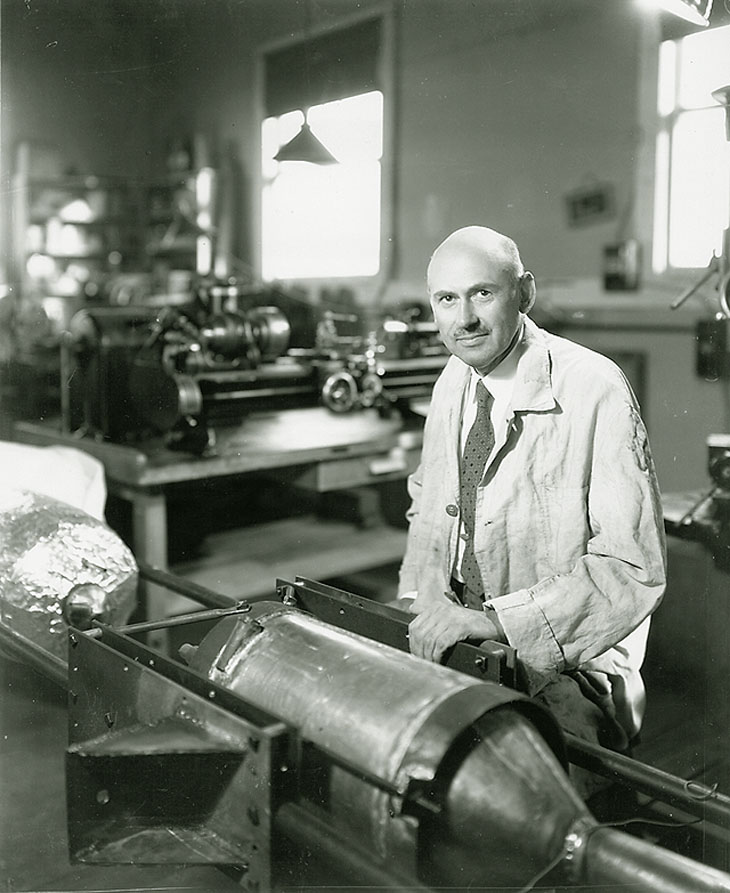
 This month, C4IP is recognizing Robert Goddard (1882-1945), the “Father of American Rocketry,” whose numerous patented inventions enabled modern spaceflight.
- Goddard was born amid the U.S. Industrial Revolution and had a fascination with space from a young age, which led him into a career as a physics professor and researcher in Massachusetts.
- Goddard conducted numerous experiments that led to breakthroughs in rocket technology, including the concepts for the first successful liquid-fueled rocket, which he patented in 1916 and successfully launched in 1926.
- Goddard ultimately secured over 200 patents for rocket innovations, including liquid propellants, multi-stage designs, gyroscopic control, and steerable thrust.
- Goddard’s inventions helped enhance U.S. military capabilities during both World Wars, and after his death, provided the groundwork for the first successful space missions.
- Rockets built on Goddard’s insights form the foundation of today’s space economy, including satellites that support GPS navigation, weather forecasting, internet, and national defense.
- More than 7,200 rocket launches since the 1950s have lifted nearly 26,000 satellites into Earth orbit.
- By 2035, the global space economy is estimated to be worth roughly $1.8 trillion.
- Goddard’s story shows how whole new industries can arise when visionary innovators have the IP protections necessary to pursue ideas ahead of their time.
[PHOTO: Smithsonian Institute]
What’s Happening in Congress
Democratic and Republican lawmakers continue to weigh legislation to prioritize strengthening IP protections, including:
- The Patent Eligibility Restoration Act (PERA), which would revitalize innovation and investment in crucial high-tech sectors by reversing arbitrary, judicially created exceptions to patent eligibility.
- The Promoting and Respecting Economically Vital American Innovation Leadership (PREVAIL) Act, which would level the legal playing field for inventors and give them a fair chance to defend their patents from unauthorized infringement by larger competitors.
- The Realizing Engineering, Science, and Technology Opportunities by Restoring Exclusive (RESTORE) Patent Rights Act, which was reintroduced in both the House and Senate. This bipartisan, bicameral legislation would reestablish injunctive relief as the primary legal remedy for patent infringement, reaffirming innovators’ constitutional rights to the exclusive ownership of their inventions.
- The Nurture Originals, Foster Art, and Keep Entertainment Safe (NO FAKES) Act, which would protect all individuals from having their voice and visual likeness copied by generative AI without consent.
We will continue to track movement on these bills and provide updates on legislative developments in upcoming editions. In the interim, you can find resources on these key issues here.