March Highlights: Countering Chinese Threats to IP
In March, China released its 15th Five-Year Plan — an economic policy roadmap that envisages how China can surpass America in innovation and “seize the commanding heights of science and technological development.” The plan repeatedly mentions the importance of intellectual property rights to China’s success. In doing so, it underscores a significant threat to U.S. innovation leadership: the rise of China as an innovation powerhouse and the associated actions it is taking related to IP to get there.
Many in Washington are familiar with the problem of Chinese IP theft, which is estimated to cost the United States between $225 and $600 billion annually. But China increasingly uses regulatory and legal mechanisms to tilt the playing field against foreign rights holders. These include: Patent term extension rules that disadvantage companies launching products first outside China; a patent linkage system that offers weaker protections than in the United States; judicial procedures that require upfront details on infringement that may be impossible to have before case discovery; limited transparency in court decisions; efforts by Chinese courts to set global royalty rates for standard-essential patents without the consent of patent owners; and the use of forced technology transfer to coerce foreign companies into sharing proprietary technologies as a condition of market access.
However, for the United States to counter China, it is not enough to address China’s unfair practices. U.S. policymakers must also engage in proactive efforts to restore the U.S. patent system’s status as the global gold standard, such as passing legislation to restore access to injunctive relief, combat abusive litigation at the PTAB, and eliminate judge-created barriers to patent eligibility. To that end, C4IP advocated throughout March for policymakers to pass pro-IP reforms to secure America’s continued leadership over China:
- C4IP Executive Director Frank Cullen sent a letter to the members of the Senate Judiciary Committee in advance of its upcoming hearing on Chinese IP theft, urging lawmakers not only to confront China’s IP-related abuses but also to comprehensively strengthen U.S. IP rights as a foundation of American competitiveness.
Read It Now: “C4IP Letter to Senate Judiciary Committee RE: Hearing on China and IP Theft“
Additional Coalition Updates
- Coming Soon: C4IP will release its 2026 Congressional Innovation Scorecard, an annual report grading members of Congress on their performance on innovation and IP issues. Stay tuned for more details.
- On April 26, C4IP and the global innovation community will mark World IP Day, which this year highlights the role of IP in sports. From patented equipment and wearable technologies that push the boundaries of athletic performance, to trademarks and designs that define teams, events, and brands, to copyrighted broadcasts that bring games to fans worldwide, IP protections help power the modern sports ecosystem. Together, these protections enable continued investment in the technologies, experiences, and industries that make sports more dynamic, accessible, and globally connected.
- Stay tuned for more details on how C4IP plans to commemorate this important annual recognition of IP.
- On April 23, C4IP Chief Policy Officer and Counsel Jamie Simpson will speak about the intersection of AI, IP rights, and business at the Center for IP Understanding’s 2026 Intellectual Property Awareness Summit (IPAS) in Columbus, Ohio. Half-price tickets are available online using the code IPAS2650.
- On April 23, C4IP Executive Director Frank Cullen will participate in the UNC Charlotte 2026 Invention of the Year Awards, which recognize cutting-edge inventions in the life sciences, data, energy, and materials. Cullen was selected to serve as a judge along with other innovation experts for this annual event.
- On April 2, C4IP Chief Policy Officer and Counsel Jamie Simpson participated in a panel discussion focused on “Innovation and Licensing in an Evolving U.S. IP Environment” as part of the LES Silicon Valley Chapter’s 22nd Annual Chapter Conference.
- On March 25, C4IP Co-Chair Andrei Iancu and Board Member Judge Paul Michel were featured experts in IP policy panel discussions at LeadershIP 2026, an annual policy conference hosted by the Center for Strategic and International Studies in Washington, D.C.
- On March 24, C4IP Co-Chairs and former USPTO Directors Andrei Iancu and David Kappos were inducted into the IPWatchdog Masters Hall of Fame in recognition of their significant, career-long contributions to protecting the U.S. IP system.
- On March 24, C4IP Executive Director Frank Cullen sent a letter to the House Judiciary Subcommittee on Courts, Intellectual Property, and the Internet highlighting recent USPTO policy successes and urging further thoughtful action to reform the PTAB, restore patent eligibility, and promote AI innovation.
- On March 20, C4IP Co-Chair and former USPTO Director Andrei Iancu, alongside former Deputy U.S. Trade Representative Jeffrey Gerrish, published an opinion essay in Fox News arguing that the Trump administration’s efforts to stop foreign governments from weakening Americans’ IP rights are the unheralded cornerstone of its trade policy.
“[I]n the long run, the administration’s lower-profile efforts to strengthen IP protections may actually prove even more beneficial for American companies, workers and consumers than its much-touted tariff policy.”
- On March 17, C4IP Board Member and former Federal Circuit Judge Kathleen O’Malley was interviewed by IAM on female underrepresentation in patenting, the importance of injunctive relief to effective patent enforcement, and the broader need for reforms to strengthen U.S. intellectual property rights.
- On March 6, C4IP Board Member and former Federal Circuit Judge Kathleen O’Malley was quoted by World Intellectual Property Review for its coverage of Influential Women in IP ahead of International Women’s Day.
- On March 10, C4IP announced that Andrew Byrnes, a distinguished intellectual property expert, has joined its Advisory Board. Byrnes brings more than 25 years of experience in law and public policy, including as Chief of Staff at the USPTO and as an independent IP advisor to technologists and artists.
Read It Now: “Council for Innovation Promotion Welcomes Andrew Byrnes to Advisory Board“
Government Rundown
- USPTO Event: PTAB Listening Session: PTAB and Life Sciences: On March 30, the U.S. Patent and Trademark Office held the first of three scheduled listening sessions on high-interest topics related to the Patent Trial and Appeal Board, focusing this time on the life sciences. The session featured two expert panel discussions exploring the impact of the PTAB on life science innovation and investment. (USPTO, 3/30)
- House Committee on Small Business Hearing: Defending Main Street: Combating CCP Threats to America’s Small Businesses: On March 25, the House Committee on Small Business held a hearing to discuss threats posed by China to American small businesses. In his opening remarks, Chairman Roger Williams underscored how Chinese IP theft and counterfeiting harm American entrepreneurs and undermine U.S. innovation and economic competitiveness more broadly. (House Small Business Committee, 3/25)
- House Committee on the Judiciary, Subcommittee on Courts, Intellectual Property, Artificial Intelligence, and the Internet Hearing: Oversight of the U.S. Patent and Trademark Office: On March 25, the House Judiciary Subcommittee on Courts, Intellectual Property, Artificial Intelligence, and the Internet held a hearing to examine the USPTO’s mission, operations, and policy priorities. USPTO Director John Squires, who appeared as the sole witness, testified on the importance of reducing application backlogs, improving patent quality, and promoting inventors’ and small businesses’ participation in the IP system, among other priorities. C4IP sent the committee a letter ahead of the hearing praising many of Squires’s accomplishments and urging continued support for policies that strengthen IP. (House Judiciary Committee, 3/25)
- USPTO Event: Alexander Graham Bell’s Telephone Patent: 150 Years, a World of Connection: On March 5, the U.S. Patent and Trademark Office held an educational program marking the 150th anniversary of Alexander Graham Bell’s seminal telephone patent and examining its impact on telecommunications and technology. Multiple panel discussions traced Bell’s invention to today’s digital networks and noted how this success story exemplifies the importance of IP protection to continued innovation. (USPTO, 3/5)
Fact Check
Congress is considering a bill, the Eliminating Thickets to Increase Competition (ETHIC) Act, that would undermine innovation by preventing patent owners from enforcing many of their rightfully earned patents. To combat “patent thickets” — groups of patents allegedly used to block competition — the bill would prevent patent owners from asserting more than one patent in a group of related patents. Proponents of the bill have claimed that it would promote competition, preserve innovation, and benefit patients.
In reality, however, the “patent thicket” narrative that the bill rests on is a myth — and, far from benefiting patients, it would undermine incentives for life-saving innovation. Below, we explain why the primary assumptions underlying the ETHIC Act are wrong:
| Claim: Companies can use terminal disclaimers to “double patent” the same invention, blocking competition. |
| In reality: The ETHIC Act targets groups of patents linked by terminal disclaimers — a legal mechanism that ties related patents together so they expire at the same time and remain commonly owned — by preventing patent owners from enforcing more than one patent within a group. Proponents of the bill and broader patent thicket narrative often assert that terminal disclaimers allow companies to block competition by acquiring multiple patents on the same invention. But this fundamentally misunderstands the purpose of terminal disclaimers, which function to prevent unfair double patenting rather than enable it. Companies use terminal disclaimers when patent examiners that an applicant is seeking patent claims on subject matter for which that applicant already has issued patent claims. In filing a terminal disclaimer, the applicant decides to accept the limitations of a terminal disclaimer rather than dispute the examiner’s characterization. These limitations include that the new patent will not extend beyond the term of the earlier one and must remain under common ownership. These safeguards ensure that patent protection on the same subject matter cannot be extended through overlapping patents. Terminal disclaimers are an important feature of the patent system because they streamline patent examination by forestalling potential objections about overlapping claims. But they do not allow patent owners to extend patent protection by filing similar patents — they explicitly serve to prevent that sort of gamesmanship. Put simply, use of terminal disclaimers is not a sign of abuse but a sign that the patent system is working as intended. |
| Claim: Pharmaceutical companies often file numerous patents on the same product to block generic competition for a longer period of time. |
| In reality: The ETHIC Act assumes that patent thickets constructed by pharmaceutical companies are a major obstacle to competition, but both parts of this assumption have been debunked by the USPTO itself. First, the USPTO has found that while “families” of related patents are present across all industries, these families are “not commonly found” in the context of drug patents. Second, the USPTO has demonstrated that the number of patents associated with a drug has no clear correlation to when a generic competitor can enter the market. In a study on drug patents and exclusivity conducted in response to a congressional inquiry, the USPTO found that “simply quantifying raw numbers of patents and exclusivities is an imprecise way to measure the intellectual property landscape of a drug product because not every patent or exclusivity has the same scope.” Further, all of the drugs that the USPTO studied experienced shorter effective exclusivity — less than 12 years, on average — than the statutory 20-year patent term, and for some, generic competitors even launched before all listed patents had expired. Finally, real-world evidence refutes the idea that generic drugmakers struggle to compete in the marketplace. Nine out of 10 prescriptions filled in the United States are for generic drugs, according to the FDA. The premise that large thickets of patents are a major barrier to drug competition is not supported by the government’s own research or by the actual state of the generic drug market. |
| Claim: The ETHIC Act would benefit patients. |
| In reality: The lack of evidence that patent thickets are a significant barrier to competition directly undermines ETHIC Act proponents’ claims that the bill is a necessary reform to promote competition and reduce drug prices. Rather than benefiting patients, the primary effect of the ETHIC Act would be to undermine life science innovation that patients rely on. The bill would make numerous valid, duly issued patents unenforceable, weakening a crucial incentive for investment in one of the most research-intensive sectors of the economy. Small companies in particular, which are responsible for most new drugs developed in the United States, rely heavily on strong patents to attract the capital they need to sustain research and development. If these companies cannot enforce all the patents on the various components that make up each new drug, that investment will inevitably dry up. Investment in valuable follow-on research is likely to be especially hard hit. Currently, companies often continue researching drugs after they reach the market, which can lead to improvements like faster-acting formulations and more convenient dosing methods. But if companies lose the ability to secure strong patents on improvements to existing drugs, patients could lose out on newer versions of drugs that would have been safer, more effective, and easier to adhere to. In short, any short-term savings that might stem from weakened patent enforcement would come at the cost of new therapies and improvements to existing ones — ultimately harming the patients the ETHIC Act purports to help. |
Celebrating American Innovation
Inventor Spotlight
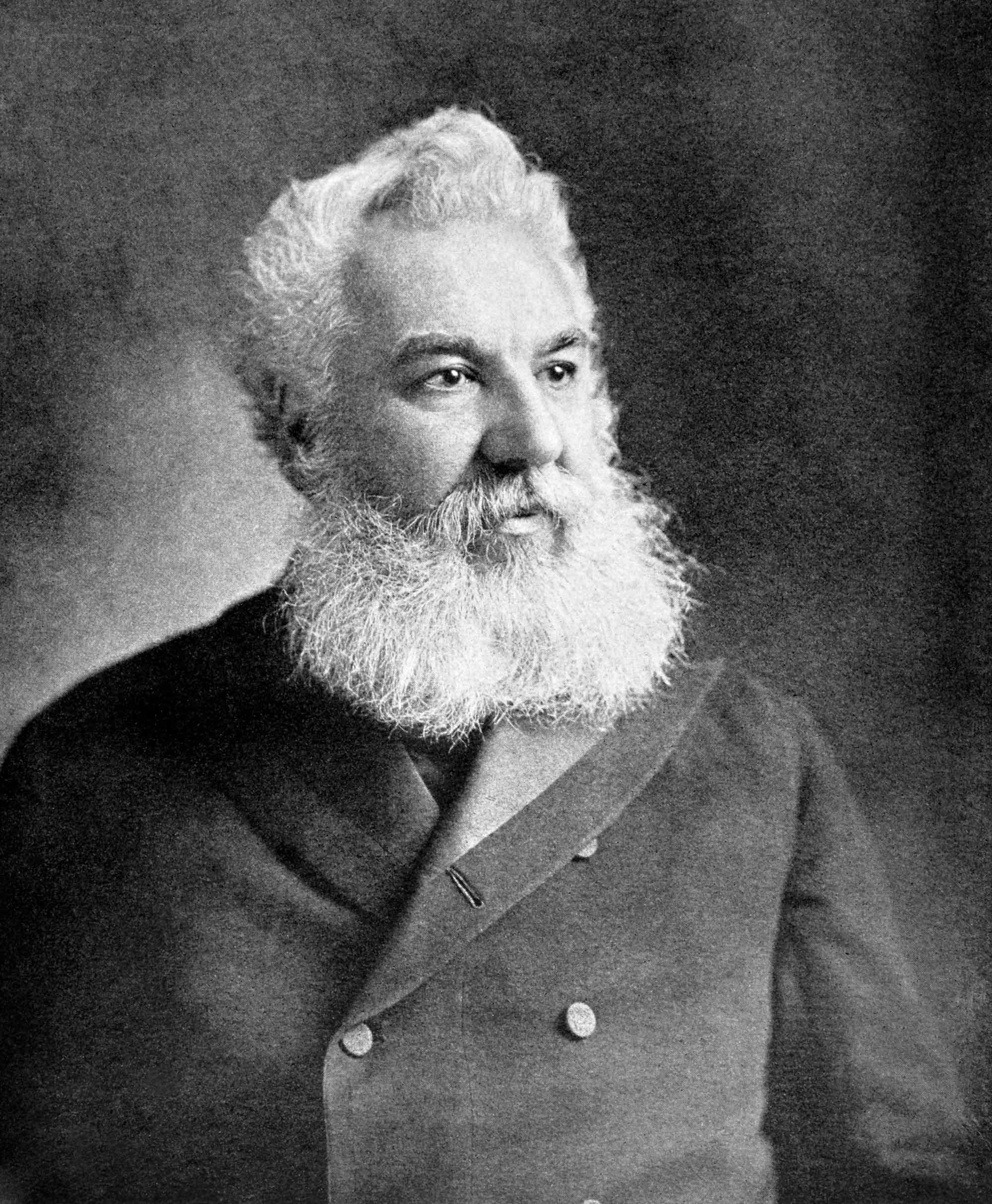 This month, C4IP is recognizing Alexander Graham Bell (1847-1922), whose invention of the telephone 150 years ago revolutionized communication around the world.
- Bell was born in Edinburgh, Scotland, but moved to New England as a young man to become a teacher for the deaf, reflecting his lifelong interest in communication.
- While working to improve the telegraph, Bell discovered a way to transmit human speech through a wire, which he patented as the telephone in 1876.
- Bell’s telephone patent, which presented the concept of a telephone system, is widely regarded as the most valuable in U.S. history.
- Bell received numerous other patents throughout his career, including improvements to the telephone and telegraph, aircraft, and the photophone — a device for transmitting sound via light.
- Bell’s invention caught on quickly as a way for consumers in New England to contact local businesses, thanks to the establishment of the first telephone exchange in New Haven, Connecticut, and the exchange’s reach soon spread across the country.
- The Bell Telephone Company, which Bell founded to commercialize his invention, evolved into the American Telephone and Telegraph Company (AT&T), which today serves over 100 million American families and nearly 2.5 million businesses.
- The legacy of Bell’s invention only continues to grow: In 2024, Americans spent roughly 4 trillion minutes talking on the phone.
[PHOTO: The Canadian Encyclopedia]
What’s Happening in Congress
Democratic and Republican lawmakers continue to weigh legislation to prioritize strengthening IP protections, including the reintroduction of several significant bills from the previous Congress:
- The Patent Eligibility Restoration Act (PERA), which would revitalize innovation and investment in crucial high-tech sectors by reversing arbitrary, judicially created exceptions to patent eligibility.
- The Promoting and Respecting Economically Vital American Innovation Leadership (PREVAIL) Act, which would level the legal playing field for inventors and give them a fair chance to defend their patents from unauthorized infringement by larger competitors.
- The Realizing Engineering, Science, and Technology Opportunities by Restoring Exclusive (RESTORE) Patent Rights Act, which was reintroduced in both the House and Senate. This bipartisan, bicameral legislation would reestablish injunctive relief as the primary legal remedy for patent infringement, reaffirming innovators’ constitutional rights to the exclusive ownership of their inventions.
- The Nurture Originals, Foster Art, and Keep Entertainment Safe (NO FAKES) Act, which would protect all individuals from having their voice and visual likeness copied by generative AI without consent.
We will continue to track movement on these bills and provide updates on legislative developments in upcoming editions. In the interim, you can find resources on these key issues here.