
Highlight: Championing American Innovation During Intellectual Property Month
Innovators, creators, and policymakers across the country are celebrating Intellectual Property Month — an annual commemoration of strong IP rights, the visionary inventors and creators who rely on them, and the life-changing breakthroughs they make possible.
Intellectual Property Month serves as a timely reminder that nearly every technology, life-saving invention, and creative work we rely on daily was made possible by strong patents, copyrights, trademarks, or trade secrets. America’s economic strength and global competitiveness depend on safeguarding this world-leading system. IP-intensive industries drive over 40% of U.S. private-sector GDP and support more than 60 million American jobs.
And as the United States continues to compete with China for global leadership in the technologies of the future — from life sciences to advanced manufacturing — maintaining strong patent protections will be essential to sustain investment and innovation. Lawmakers have a vital opportunity to unite behind pro-IP legislation that strengthens American industry, protects jobs, and helps ensure the United States remains a global leader in the technologies of the 21st century.
Throughout Intellectual Property Month, C4IP is highlighting the value of strong IP rights and building momentum for continued advocacy:
- C4IP is launching a social media series highlighting how IP rights have helped American inventors turn their ideas into impactful real-world technologies. Follow C4IP on Facebook, X, LinkedIn, and Bluesky for the latest updates.
- On October 6, C4IP Chief Policy Officer and Counsel Jamie Simpson spoke at World Intellectual Property Review’s annual Trade Secrets East 2026 conference in New York City. Learn more here.
- On October 7, C4IP Chief Policy Officer and Counsel Jamie Simpson will discuss the current state of Patent Trial and Appeal Board (PTAB) policy at the 2026 PTAB Bar Association Thought Leader Summit. Learn more here.
- On October 8, C4IP Co-Chair and former USPTO Director Andrei Iancu will deliver a keynote speech at San Francisco’s 2026 Via Bridge Summit, a conference on IP licensing and innovation policy that will also feature current USPTO Director John Squires. Learn more here.
- On October 14, C4IP President and CEO and former USPTO Deputy Director Coke Morgan Stewart will take part in a fireside chat on the future of American innovation with Rich Chylla, executive director of the University of Virginia Licensing & Ventures Group and former AUTM board chair. Learn more here.
- On October 20, C4IP President and CEO and former USPTO Deputy Director Coke Morgan Stewart will take the stage at the 2026 Licensing Executives Society International 2026 USA & Canada Annual Meeting in San Diego, CA, for a fireside chat. Learn more here.
- C4IP President and CEO and former USPTO Deputy Director Coke Morgan Stewart recently joined the National Academy of Inventors’ Fellows Selection Committee, where she will help select fellows for the Class of 2026. Learn more about the fellows program here.
- Stay tuned for more programming, resources, and updates from C4IP in the weeks ahead!
Government Engagement
- On September 2, C4IP Co-Chair and former USPTO Director David Kappos testified at a House Judiciary Subcommittee on Courts, Intellectual Property, Artificial Intelligence hearing on renewing the USPTO’s fee-setting authority. His testimony, along with a letter from C4IP, urged lawmakers to renew that fee-setting power long-term to give the agency stable funding to reduce backlogs, improve patent quality, and support inventors.
- On September 8, C4IP sent a letter to the Department of Commerce and the White House Office of Science and Technology Policy following the September 1-2 G20 Innovation Ministerial, where ministers adopted shared principles on emerging technologies and innovation. C4IP applauded the agreement’s recognition of strong IP protections as essential to investment, commercialization, and technological leadership.
- On September 15, C4IP sent a letter to the House Judiciary Subcommittee on Courts, Intellectual Property, Artificial Intelligence, and the Internet responding to misleading statements about terminal disclaimers made at its June hearing on medical innovation and access. C4IP explained the importance of terminal disclaimers to innovation, debunked the idea that they are duplicative, and urged lawmakers to reject the harmful ETHIC Act.
- On September 17, C4IP submitted comments in response to the U.S. Trade Representative’s request for public input on China’s compliance with World Trade Organization commitments. C4IP urged the agency to address shortcomings in China’s patent enforcement, pharmaceutical IP protections, trade secret safeguards, and efforts to combat counterfeiting.
- On September 23, C4IP sent a letter to the Senate Judiciary Subcommittee on Intellectual Property ahead of its September 29 hearing on USPTO oversight. C4IP urged lawmakers to strengthen the reliability of the patent system and ensure the USPTO continues its recent progress in modernizing patent application reviews.
Additional Coalition Updates
- On September 2, C4IP Co-Chair and former USPTO Director David Kappos was quoted in IPWatchdog and Legis1 articles about the House Judiciary IP Subcommittee’s hearing on the USPTO’s fee-setting authority, where Kappos had testified in favor of renewing fee-setting authority long-term.
- On September 4, C4IP published a blog post warning families about dangerous counterfeit goods, from faulty laptop chargers to chemical-laden clothing, that they could encounter during back-to-school shopping and explaining how strong IP enforcement protects consumers’ health, safety, and wallets.
- On September 4, C4IP President and CEO Coke Morgan Stewart was quoted in an MLex article on the statements of interest the Justice Department has filed in recent AI-training copyright infringement cases, noting that C4IP supports both developing strong AI models and protecting creative works.
- On September 17, C4IP President and CEO Coke Morgan Stewart spoke on a Congressional Inventions Project panel on Capitol Hill, “The Scorecard: Is America or China Winning the Innovation Race?,” which discussed technological competition between the United States and China and how patent policy has affected America’s competitive edge.
- On September 23, C4IP President and CEO Coke Morgan Stewart was profiled in an Inventors Digest article that highlighted her record of strengthening patents and said she “could be the [USPTO’s] most consequential official of the decade.”
- On September 23, C4IP Chief Policy Officer and Counsel Jamie Simpson spoke on an IPWatchdog panel discussing how recent and proposed changes to patent policy could shape investment, competition, and the development of new medicines.
- On September 23, C4IP hosted a webinar on its recent Idea Factories report, featuring insights from experts including report author Professor Jonathan Barnett, C4IP President and CEO Coke Morgan Stewart, C4IP Co-Chair and former USPTO Director Andrei Iancu, CSIS Non-Resident Expert Kirti Gupta, and bestselling author Safi Bahcall.
Watch Now: “Idea Factories: The Engine Behind America’s Innovation Economy”
- On September 24, C4IP President and CEO Coke Morgan Stewart was interviewed at IPWatchdog’s Women’s IP Forum, where she argued that it is time to “shock” the U.S. patent system by strengthening patent rights and more forcefully pushing back against attacks on IP.
- On September 29, C4IP President and CEO Coke Morgan Stewart joined the IP Protection Matters podcast to discuss how strong patent rights help inventors secure investment, compete, and drive American economic growth. She also addressed patent eligibility and the need for a more stable IP system as the United States competes with China. Listen here.
- On September 30, C4IP President and CEO Coke Morgan Stewart joined former U.S. District Judge Alan D. Albright for a fireside chat about PTAB reform at US Inventor’s fourth annual conference, “Are You Stuck in the Invention Matrix?,” in Washington, D.C. The conference also featured insights from USPTO Director John Squires and numerous other IP experts and innovation leaders.
- On October 1, C4IP’s recent comments on China’s persistent shortcomings in intellectual property protection were mentioned in a South China Morning Post article about the WTO’s hearings on the topic.
Fact Check
The House Judiciary Subcommittee on Courts, Intellectual Property, Artificial Intelligence, and the Internet recently held a hearing, “Medicines and IP: Balancing Innovation and Access,” to discuss how strong patent rights can be balanced with widespread access to affordable medicines. One witness testifying on behalf of a generic drug manufacturer repeatedly argued that drug patents linked by terminal disclaimers are duplicative and unnecessary, and that drugmakers use them to unfairly extend patent protection.
However, as C4IP explained in its letter to the Subcommittee, these arguments rest on a fundamental misunderstanding. Far from being a tactic to extend market exclusivity through duplicative patents, terminal disclaimers prevent duplicative patenting. When the Patent Office considers two applications too closely related, an inventor can file a terminal disclaimer agreeing that the later patent will expire no later than the earlier one and that the patents will remain under common ownership. That lets inventors seek protection for different aspects of a complex invention while ensuring that drugmakers cannot unfairly extend their market exclusivity.
Below, we set the record straight on terminal disclaimers:
| Claim: A company that files a terminal disclaimer is essentially admitting the new patent is a duplicate — otherwise, it would never agree to give up part of its patent term. |
| In reality: That argument is rooted in outdated patent law. Before 1995, patent terms lasted 17 years from the date a patent was issued. When a terminal disclaimer linked two patents issued on different dates, it surrendered part of the later patent’s term. But today, patents generally last 20 years from their earliest applicable filing date. Related patents in the same family share the same filing date, so filing a terminal disclaimer usually gives up little or no additional time.
When inventors file terminal disclaimers, they do sacrifice the right to sell or license the related patents to separate owners. But this choice often makes sense as a practical matter, since contesting a USPTO examiner’s double-patenting rejection can be expensive and time-consuming. Put simply, inventors usually file terminal disclaimers to save time and money, not because their patents lack unique value. |
| Claim: Patents linked by terminal disclaimers add no value to innovation. |
| In reality: Terminal disclaimers are a patent prosecution tool that allows inventors to obtain patent protection for the full scope of the invention they disclose to the public. Inventors can work on smaller claim sets at a time — benefiting both applicants and the USPTO — and receive a patent on claims that the examiner has allowed while continuing to work on obtaining claims on other aspects of the invention. |
| Claim: Terminal disclaimers let inventors defend invalid patents indefinitely. |
| In reality: Patents connected by terminal disclaimers face the same legal scrutiny as other patents. Competitors can challenge them in federal court or through Patent Office proceedings, including at the Patent Trial and Appeal Board and the Central Reexamination Unit. If a patent claim is found invalid, it cannot be enforced. Furthermore, if related patents concern overlapping legal and factual issues, resolving a challenge to one patent is likely to help streamline litigation of the other claims. |
Celebrating American Innovation
Inventor Spotlight
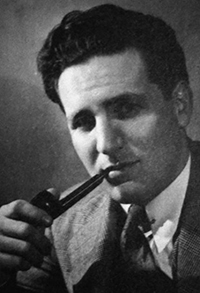
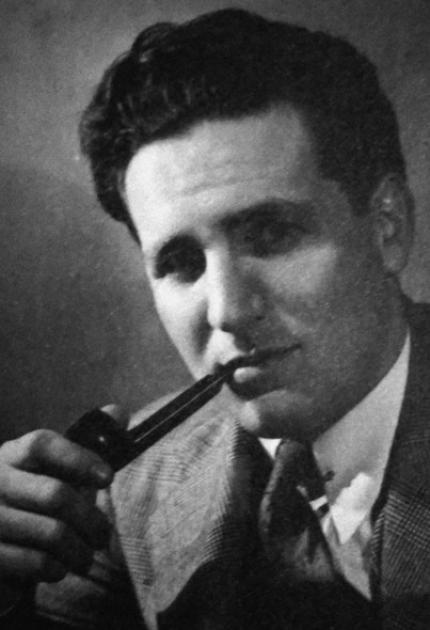
This month, C4IP is recognizing Samuel Alderson (1914-2005), whose invention of the crash test dummy has saved countless lives by improving vehicle safety.
- Raised in California, Alderson graduated high school at 15 and went on to study and work as an engineer.
- In 1952, he founded Alderson Research Laboratories, where he began developing humanlike dummies for testing aircraft ejection seats, radiation, and automobile safety — replacing the use of cadavers and sandbags.
- Alderson received multiple patents on his inventions, including a patent for a radiation testing dummy in 1961 and a patent for a crash test dummy in 1981.
- Alderson’s inventions proved most critical in helping automakers improve safety during the mid-20th century, supporting the development of innovative protections such as seat belts, airbags, head restraints, and collapsible steering columns.
-
- The National Highway Traffic Safety Administration estimates that improvements in vehicle safety technologies collectively saved more than 600,000 lives from 1960 through 2012.
- The U.S. traffic fatality rate fell by more than three-quarters between 1960 and 2024, thanks in part to these innovations.
-
- Alderson’s dummies also helped improve technologies beyond automobiles: The military has used them to test parachutes and ejection seats, while NASA used them to simulate Apollo splashdowns.
- Today, crash test dummies remain an integral part of federal vehicle safety testing procedures, underscoring how Alderson’s patented inventions and the improvements he made to them over time have had enduring benefits for America’s health and safety.
[PHOTO: National Inventors Hall of Fame]
What’s Happening in Congress
Democratic and Republican lawmakers continue to weigh legislation to prioritize strengthening IP protections, including the reintroduction of several significant bills from the previous Congress:
- The Patent Eligibility Restoration Act (PERA), which would revitalize innovation and investment in crucial high-tech sectors by reversing arbitrary, judicially created exceptions to patent eligibility.
- The Promoting and Respecting Economically Vital American Innovation Leadership (PREVAIL) Act, which would level the legal playing field for inventors and give them a fair chance to defend their patents from unauthorized infringement by larger competitors.
- The Realizing Engineering, Science, and Technology Opportunities by Restoring Exclusive (RESTORE) Patent Rights Act, which was reintroduced in both the House and Senate. This bipartisan, bicameral legislation would reestablish injunctive relief as the primary legal remedy for patent infringement, reaffirming innovators’ constitutional rights to the exclusive ownership of their inventions.
- The Nurture Originals, Foster Art, and Keep Entertainment Safe (NO FAKES) Act, which would protect all individuals from having their voice and visual likeness copied by generative AI without consent.
We will continue to track movement on these bills and provide updates on legislative developments in upcoming editions. In the interim, you can find resources on these key issues here.